Paint correction in Sonipat
Swirl marks, light scratches, water spots and tired, faded paint taken out by machine at our Sonipat studio, one measured stage at a time.
What paint correction actually fixes
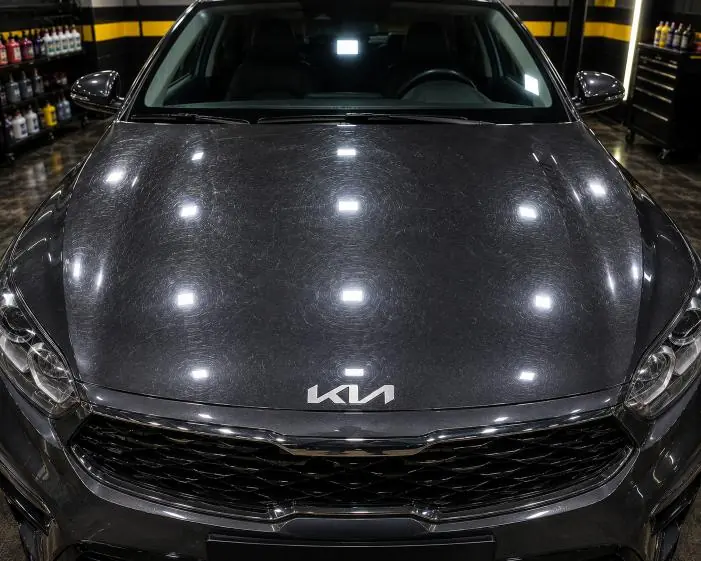
Park your car in the afternoon sun and look along the bonnet at an angle. The fine circles spinning around the sun's reflection are swirl marks, and almost every car in Sonipat that gets a daily cloth wipe has them, often along with light scratches, chalky faded patches and white rings from hard borewell water.
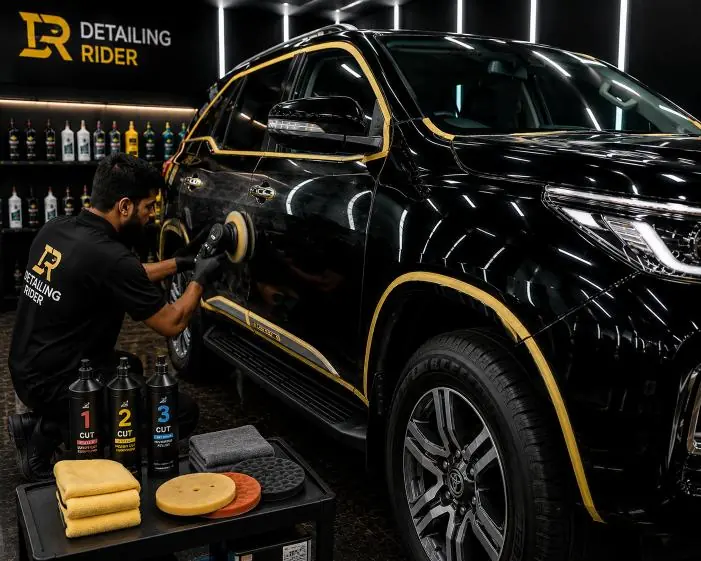
Paint correction removes that damage instead of hiding it. We use a machine polisher, abrasive compounds and matched pads to level the top of the clear coat until the marks are gone or much softer. No glaze or filler goes on to cover anything, so what you see at handover is the real paint.
Most of this work happens at our head office on Sai Baba Road, the biggest of our studios. Charges depend on the size of the car and the stage, and current rates are on the price list.
Swirl marks before and after
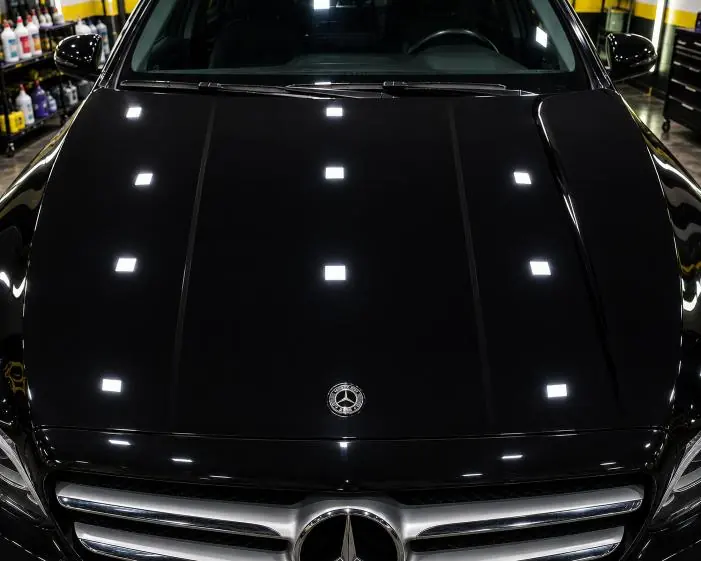
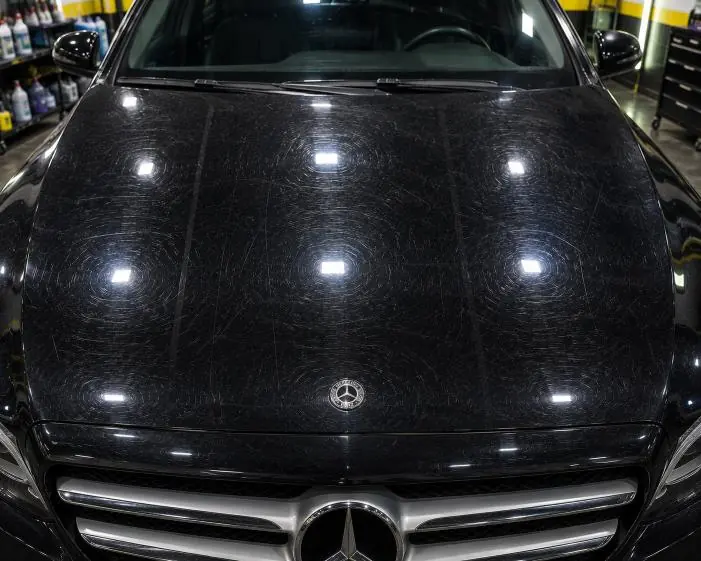
A Mercedes bonnet photographed under the same studio light before and after swirl removal.
 BeforeAfter
Same bonnet, same lighting. The web of wash marks is gone and the reflection is sharp again.
Defects we can polish out
If the damage sits inside the clear coat, it can usually be levelled out or made far less visible.
Swirl marks
Circular wash marks from dirty cloths, brush washes and dry wiping. They are the most common problem we see and usually the easiest to fix.
Light scratches
Fingernail marks around door handles, bag scratches on the boot lid and thin lines from bushes. If your nail does not catch in the scratch, it will very likely polish out.
Oxidation
Dull, chalky paint on cars that sit outdoors through Haryana summers. Reds, maroons and older solid colours show it first.
Water spots
Mineral rings from hard water that have baked on in the sun. Fresh spots wash off, older ones etch in and need a polishing step.
Bird dropping and sap marks
Cars parked under trees collect both, and in May heat they eat into the clear coat within days. Light etching polishes out, deep etching only improves.
Single, two and three stage correction
We inspect first and suggest the lightest level that gets a good result, because every stage removes a little clear coat.
| Level | What we do | Usually suits |
|---|---|---|
| Single stage | One polishing step with a medium compound and a finishing pad | Newer cars, light swirls and haze, preparation before ceramic coating |
| Two stage | A cutting step followed by a finishing polish | Most daily driven cars with visible wash marks and light scratches |
| Three stage | Heavy cut, refining polish and a final fine finish | Neglected, oxidised or badly swirled paint, older dark cars, cars being readied for sale |
We measure paint thickness first
Factory clear coat is thin, often only a little thicker than a sheet of paper. Each polishing step takes off a tiny amount, so before any machine touches the car we check every panel with a paint thickness gauge.
The readings tell us a lot. A panel that reads much thicker than the rest has usually been repainted, and a panel that reads thin has probably been rubbed hard before. Thin panels get a lighter polish or are left alone, and we tell you why.
A small test section then decides the gentlest pad and compound that clears the defects.
What polishing cannot remove
Some damage goes deeper than the clear coat, and no amount of polishing will fix it. The quick test is your fingernail. If it catches in the scratch, or you can see white primer or bare metal at the bottom, the scratch has gone through the clear layer.
Stone chips from NH-44, deep key scratches and paint peeling at the edges all fall into this group. Polishing can round off the edges so they catch less light, but the mark stays. For these we suggest touch-up or panel repair through our dent and paint team, and we say so at inspection, not after you have paid for a correction.
If chips worry you more, paint protection film on the front stops new ones.
Headlight restoration
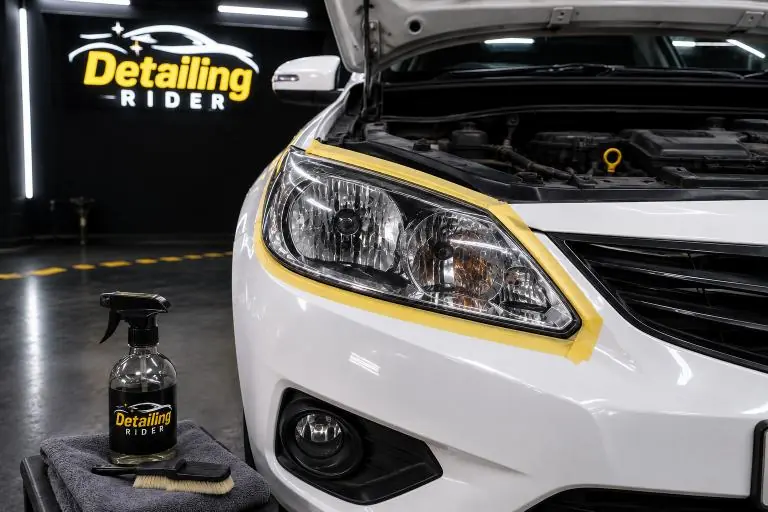
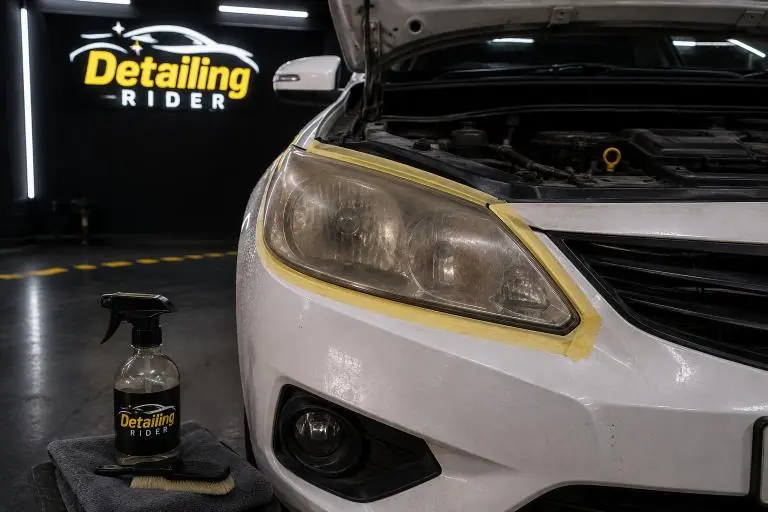
Yellow, cloudy headlights are plastic that has broken down in UV, and most can be brought back with sanding and polishing.
 BeforeAfter
A sun-yellowed lens after wet sanding, polishing and a UV sealing coat.
Why roadside rubbing damages paint
A lot of cars reach us after a cheap rubbing at a roadside wash. The usual pattern is a rotary machine at high speed, one heavy compound for the whole car, no wash or clay beforehand and no thickness check. Grit left on the paint gets ground in by the pad.
The car looks shiny for a week because the compound leaves oily fillers behind. Then they wash off, and you see holograms, burnt edges on bonnet creases and, in bad cases, clear coat worn through. Once clear coat is gone, the fix is repainting, not polishing.
How a correction day runs at the Sonipat studio
A two stage job on a mid size car usually takes one to two days from wash to handover.
Wash and decontaminate
Foam wash, iron remover and clay bar to lift tar, factory fallout and anything that would scratch under the pad.
Inspect and measure
Every panel is checked under inspection lights and with the thickness gauge, and problem areas are marked.
Correct panel by panel
Cutting and finishing steps on each panel, with a wipe-down in between to confirm the marks are really gone and not just filled.
Protect and hand over
We seal the paint, or apply ceramic coating if you have booked it, and walk you round the car under the lights.
Related pages
Questions people ask
Is machine polishing safe for my clear coat?
It is safe when the paint is measured first and the lightest method that works is used. Every stage removes a very small amount of clear coat, so thin or repainted panels get gentler treatment.
How long does paint correction take?
A single stage polish on a hatchback or sedan is usually finished the same day. Two and three stage work on a larger SUV can take one to two days, because each panel is corrected and checked on its own.
Will the swirl marks come back?
Swirls come from washing, so they return if the car goes back to dry wiping and shared cloths. A pH-neutral shampoo, two buckets and clean microfibre keep them away far longer.
Can you fix yellow headlights?
Yes. We wet sand the damaged outer layer, polish the lens clear and finish with a UV sealing coat so it does not yellow again quickly. Lenses that are cracked or fogged from the inside need replacing instead.
Should I get correction before ceramic coating or PPF?
In almost every case, yes. Coating and film both lock in whatever is under them, so swirls left on the paint stay visible for years.
Do I need an appointment?
It helps, because correction ties up a bay for a full day or more. Call +91 70561 03055 or message us on WhatsApp +91 72063 13033 and we will give you a slot. The studio is open Monday to Saturday, 9 AM to 7 PM.
Where the work is done
Sonipat head office
Sai Baba Road, near Devendra Photostat, opp. MRF Tyres, Saipuram, Bhagat Pura, Sonipat, Haryana 131001
+91 70561 03055
+91 70561 66055
Monday to Saturday, 9 AM to 7 PM. Sunday closed.
Want an exact price for your car?
Send the car model and a couple of photos on WhatsApp. We reply with the right option and the price, usually the same day.