Paint protection film for cars in Sonipat
A clear, self-healing film that takes the stone chips and wash scratches so your factory paint does not have to. Fitted by hand at our Sonipat head office studio.
What paint protection film is
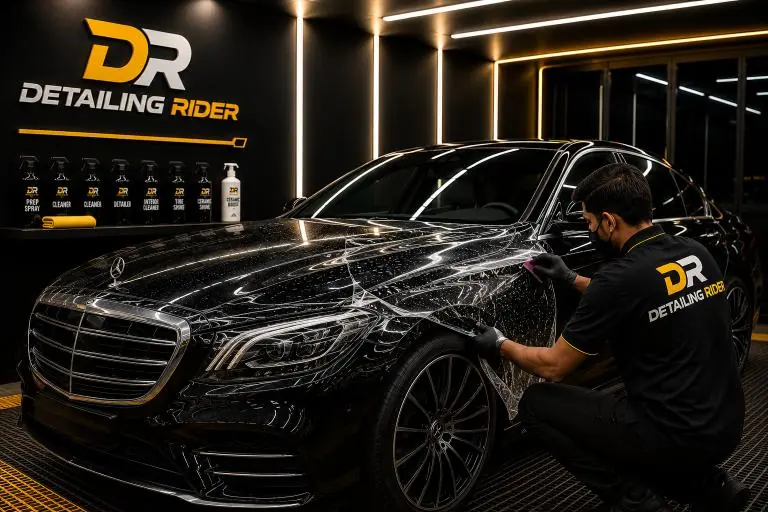
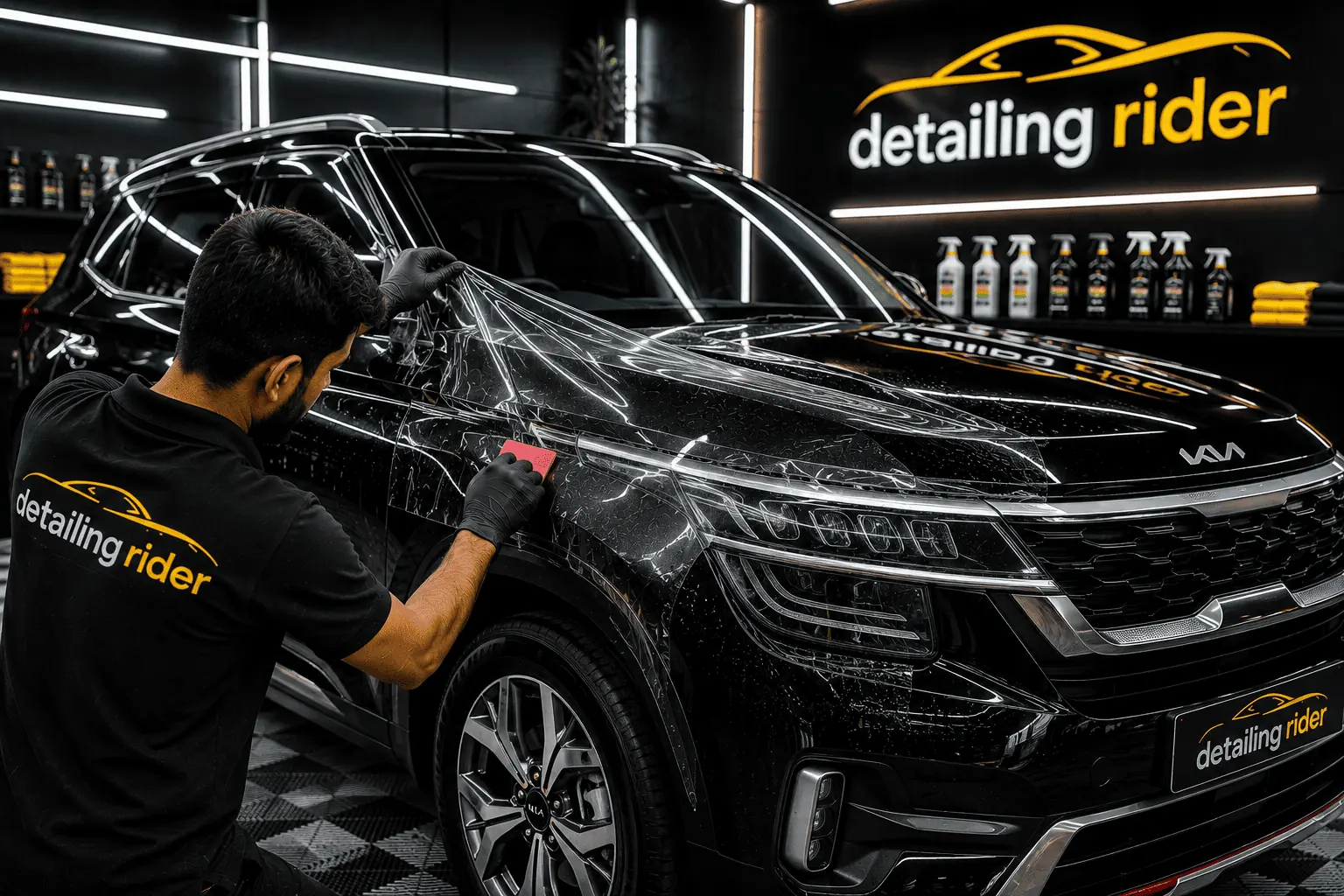
Paint protection film, or PPF, is a clear sheet of thermoplastic polyurethane (TPU) about 0.2 mm thick, with an adhesive on one side and a hard top coat on the other. We lay it over painted panels so that a stone, a key or a gritty cloth hits the film first.
TPU matters. It stretches around curves, stays clear for years and does not go yellow or brittle in the Haryana sun. Cheaper PVC films look similar on day one, then crack, cloud and leave glue on the paint when they come off. We only fit TPU film.
Most cars that come to us from the NH-44 and KMP side already have small white dots on the bonnet edge and bumper. Those are chips where gravel thrown up by trucks has gone through the clear coat. Film stops most of them before they start.
See what PPF covers
Choose a coverage to see which panels get film, then watch the seven steps we follow on every panel. The stone chip and self-healing tests show what the film does on the road. Drag the car to look around it.
1. Choose PPF coverage
2. See it in action
Paint colour
Window tint
The gold shading only marks where film goes. Real PPF is clear. 3D model: Car Concept by Eric Chadwick, CC BY 4.0.
How the self-healing top coat works
The top layer of good PPF is elastic. Light scratches from wash cloths, fingernails near the door handles or a brushing branch close up again when the film warms up. A summer afternoon in the car park usually does it, and warm water works in winter.
It has limits, and we would rather you hear them from us. A deep gouge that cuts through the film will not heal, and a heavy stone can still dent the metal under it. What the film does is keep that damage in a layer we can replace, instead of in your paint.
Coverage options and who they suit
You do not have to wrap the whole car. Most people pick by how and where they drive.
| Option | Panels covered | Usually suits |
|---|---|---|
| Partial front | Bonnet front section, front bumper, mirrors | City cars and owners starting on a budget |
| Full front | Full bonnet, bumper, fenders, headlamps, mirrors, A-pillars | Daily highway drivers on NH-44 or the KMP |
| Full body gloss | Every painted panel | New cars and dark colours that show every mark |
| Full body matte | Every painted panel, satin finish | Owners who want a matte look on gloss paint |
| Colour change PPF | Every painted panel in a new colour | A colour change that can be removed later |
| Door edge guards | Thin strips on door edges and cups | Tight parking, kids, and crowded markets |
Gloss, matte or colour PPF
The protection underneath is the same. The difference is the look.
Gloss
Keeps the factory look and adds a little depth. This is what most people choose and what we suggest for a new car.
Matte
Turns gloss paint into a satin finish without touching the paint. Matte film needs gentler washing and no waxes or polishes.
Colour PPF
Changes the colour of the car while protecting the original paint. If you get bored of it or want to sell, it can come off.
How we fit PPF at the Sonipat studio
Film shows whatever is under it, so most of the time goes into preparation.
Look at the paint together
We check every panel under studio lights and point out existing chips, swirls and repaint so you know what the film will be sitting on.
Wash and decontaminate
A full wash, then iron remover and clay to lift brake dust, tar and the factory fallout that cars from Rai and Kundli carry.
Correct the paint where needed
Swirls and haze are machine polished out first. Sealing them under film would keep them there for years.
Cut and lay the film
Film is cut to your model, floated on with slip solution, squeegeed out and wrapped around edges where the panel allows it.
Settle, check and hand over
The car stays indoors while the adhesive grips. We check every edge before handing over the keys and the warranty card.
Looking after the film
For the first week, do not wash the car and keep pressure washers away from the edges. Small water bubbles or a slight haze in the first days are normal and dry out on their own.
After that, wash with a pH-neutral shampoo and a clean mitt. Skip roadside washers who use the same cloth on every car, because grit dragged across the film will dull it over time, self-healing or not. A ceramic coating on top makes dust and fog grime rinse off more easily, and our guide on washing a coated car applies to film too.
When PPF is worth it and when it is not
PPF makes the most sense on a new or nearly new car that you plan to keep for three years or more, especially if you drive the highway several times a week or own a black or dark grey car. Original paint also helps when you sell, because buyers check for repaint first.
It is not always the right call. If the paint already has deep chips or a respray, that needs dent and paint work or paint correction first. If the car mostly sits in a covered parking spot and does short trips, a ceramic coating may be all you need. Our PPF vs ceramic coating article goes through the trade-offs.
PPF comes with a written warranty, up to 5 years depending on the film. Coverage prices are on the price list, and we will tell you honestly if a cheaper option suits your car.
Questions people ask
How long does PPF last?
Good TPU film lasts many years with normal care. PPF comes with a written warranty, up to 5 years depending on the film you choose. Parking in shade and washing gently both help it last.
Will PPF damage my paint when it is removed?
Not on factory paint in good condition. TPU film is designed to come off cleanly, usually with a little heat. Repainted panels are a different story, so we check for repaint before fitting.
Can you see the film on the car?
On gloss film, from a normal distance, most people cannot. Up close you may spot an edge line where the film stops on a panel. We wrap edges where the shape allows so these are kept to a minimum.
How long will my car be at the studio?
It depends on coverage and the paint condition. A partial or full front is much quicker than a full body, which takes several days. We give you a time at booking, and you can call us on +91 70561 03055 to check slots.
Should I get PPF or ceramic coating?
PPF stops chips and scratches. Ceramic coating makes washing easier and adds gloss but will not stop a stone. Many highway drivers do front PPF with ceramic on the rest of the car.
Where can I see what each option costs?
All coverage levels and finishes are on our price list. The price depends on the size of the car and how much of it is covered.
Where the work is done
Sonipat head office
Sai Baba Road, near Devendra Photostat, opp. MRF Tyres, Saipuram, Bhagat Pura, Sonipat, Haryana 131001
+91 70561 03055
+91 70561 66055
Monday to Saturday, 9 AM to 7 PM. Sunday closed.
Want an exact price for your car?
Send the car model and a couple of photos on WhatsApp. We reply with the right option and the price, usually the same day.