
Why the monsoon is hard on cars here
Haryana does not get Mumbai-level rain, but it gets enough to cause trouble. A few heavy showers flood the underpasses in Sonipat and Panipat, service roads along NH-44 turn to mud, and village lanes stay wet for days. Between showers, the heat and humidity sit inside closed cars.
Most monsoon damage is slow. You do not see the rust starting or the mould growing under the carpet. By October, when the rain stops, the car smells musty, the underbody has a brown crust and the paint has new spots that will not wash off. A little care during the season avoids nearly all of it.
Underbody and rust
Rainwater on our roads is not clean. It carries mud, fertiliser runoff from the fields, oil and grit, and it gets sprayed into every gap under the car. Left there, it holds moisture against the metal for weeks.
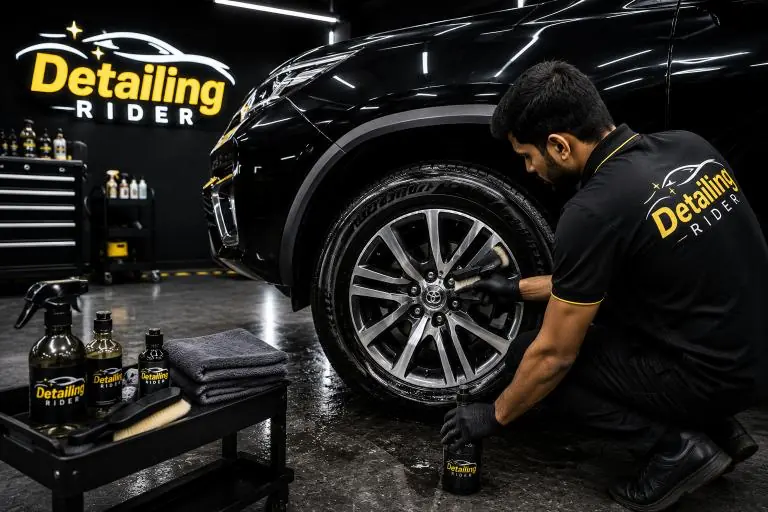
After driving through standing water or a muddy stretch, rinse the underbody and wheel arches with a hose or pressure washer as soon as you can. Pay attention to the area behind the wheels, the sills under the doors and the lower edges of the doors, where water collects. Check that the drain holes at the bottom of each door are not blocked with mud.
If the car has a scratch or chip that has gone through to the metal, get it touched up before the rain, not after. Exposed metal starts to rust within weeks in humid weather. Our Dent & Paint team handles these repairs.
Damp interiors and the monsoon smell
Wet shoes, wet umbrellas and windows cracked open in a shower all bring water inside. The carpet absorbs it, the underlay holds it, and in the heat it turns into that sour, musty smell that air fresheners only cover.
Keep rubber mats in the car during the monsoon and empty them often. Never leave a wet umbrella on the floor. On dry days, park in the sun with the windows slightly down for an hour, and run the AC with fresh air instead of recirculation for the first few minutes of each drive.
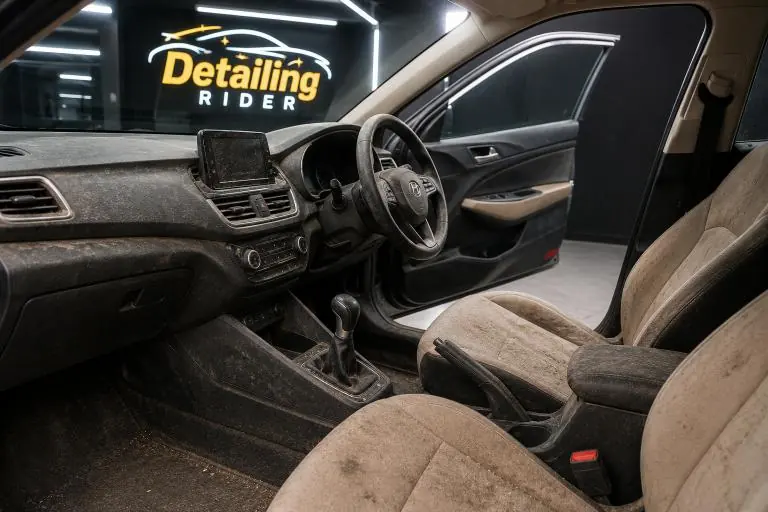
If the smell has already set in, the moisture is deep in the carpet or the AC. A proper interior detailing with steam and hot water extraction, followed by complete drying, removes the source rather than masking it.
Wipers and glass
Clear vision matters more in a monsoon shower than at any other time of year.
Check the wiper blades
Summer heat cracks the rubber. If the blades streak, judder or leave a smeared arc, replace them before the first heavy rain.
Clean the glass properly
Road film and oily residue cause the glare you see at night with oncoming headlights. Clean the windscreen inside and out with a glass cleaner.
Fill the washer tank
Use water with a proper washer fluid, not dish soap, which leaves a film and can harm paint and rubber.
Use the demister early
Fogging is worst in the first few minutes. Turn the AC on towards the windscreen as soon as you start, rather than wiping the glass with your hand.
Mind your window film
If you have window film, clean it from the inside with a soft microfibre and a mild cleaner, never a blade or rough cloth.
Paint and bird droppings
The monsoon brings more birds, more insects and more tree sap, and cars parked under trees take the worst of it. Bird droppings are acidic. Rain softens them and spreads them, and then the sun bakes them into the clear coat, leaving a dull etched mark that stays after washing.
Remove droppings the same day. Soak them for a minute with water or a quick detailer and lift them off with a soft cloth. Do not scrape or rub dry.
Rain also leaves water spots. Rainwater picks up dust on the way down, and when the drops dry in the sun they leave a ring of mineral residue. A quick rinse and dry after a shower prevents most of it.
This is where a ceramic coating really helps. Water rolls off with the dirt instead of drying on the paint, and droppings and sap sit on top of the coating rather than eating into the clear coat.
Never drive fast through deep standing water. Water drawn into the engine intake can cause serious damage. If you cannot see the road surface or the kerb, wait or take another route.
Where to park in the monsoon
A good parking spot does more for your car than any product.
Avoid trees
Shade is welcome in summer, but in the monsoon trees drop sap, leaves, droppings and sometimes branches.
Avoid low spots
Basement ramps and low corners of open parking are the first places to flood. Park on higher ground when heavy rain is forecast.
Use a breathable cover carefully
A cover keeps droppings off, but a wet cover on a wet car traps moisture. Only cover a dry car, and remove the cover after rain.
Leave room to dry
On sunny days, park where the car gets some sun to dry out the underbody and the cabin.
A post-monsoon check is worth it
Once the rain stops, book a full car detailing session. We wash the underbody, decontaminate the paint, clean the interior and check for early rust, water marks and etching before the winter fog and stubble smoke arrive. It is far easier to fix small monsoon damage in October than to deal with it a year later.